

When did we all stop trusting our instincts?
We've been outsourcing our knowing. It's time to reclaim it.

At the beginning of this year I was feeling excited (joyous, actually) about the prospect of getting my time back. What I mean is that for the first time in more than five years, I was going to have both my kids in full-time care, suddenly giving me five whole days back to myself. Short, shitty school-hour days, but still.
With my eldest starting ‘big’ school and my youngest ramping up to five days at daycare, it felt a little like freedom—and something resembling silence—was waiting just around the corner.
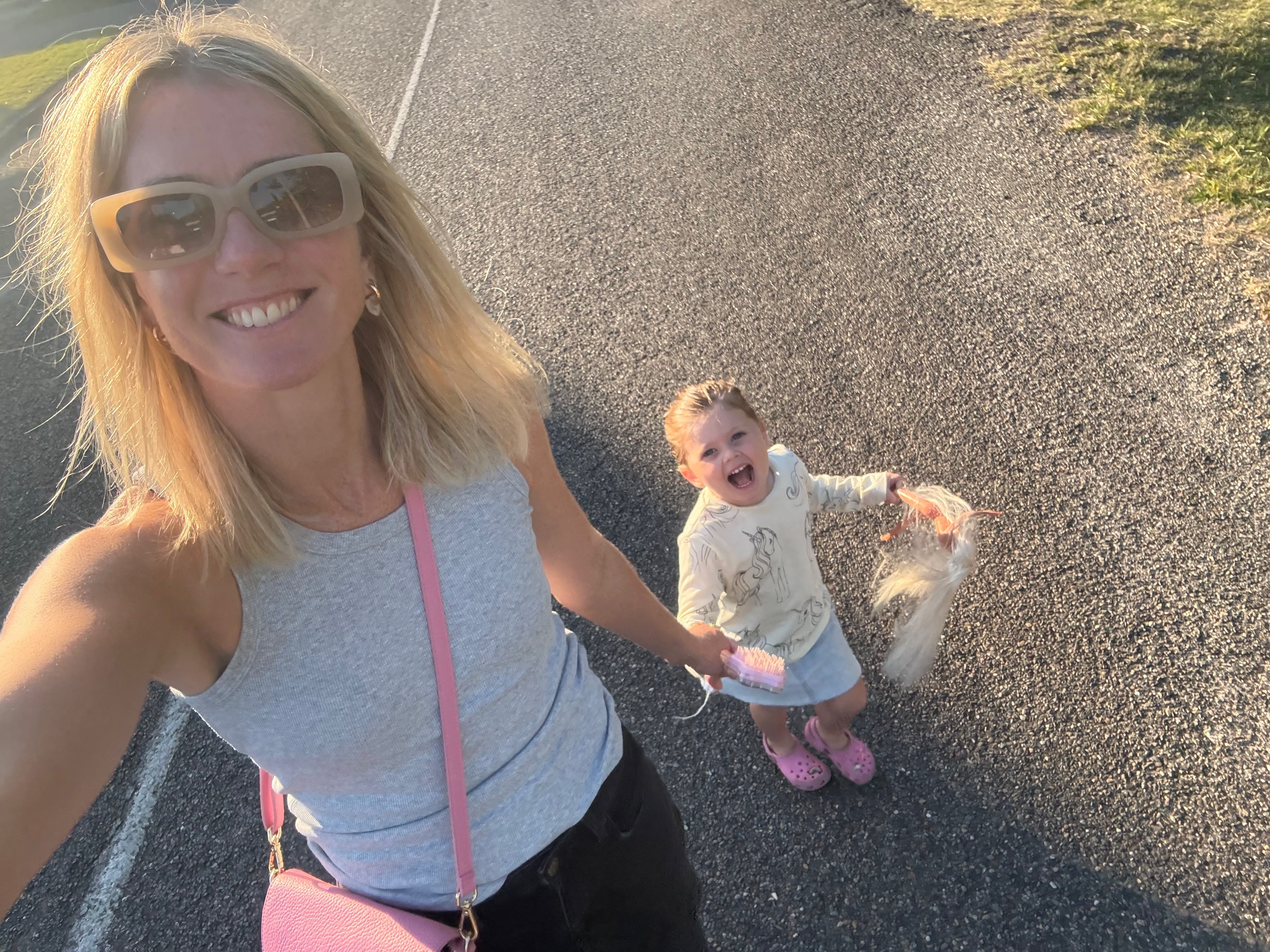
But within a few days of this new normal, my gut was screaming at me that I’d made the wrong decision. That Billie, my three-year-old, was simply not ready to be away from me. Her mood had shifted, there was a clinginess and a level of uncertainty about her that had not been there before. She is wilful, strong-minded, and I am constantly in awe of her confidence and self-assuredness. But in just a few days, I’d felt it fade a little. And she was tired.
My instincts told me to pull her out of daycare for a day. But I admit, it took me a while to listen.
On a deep level, I think I felt some shame. Shame that I’d made a decision that, although entirely reversible, would be an admission that I’d got it wrong. That I’d done something I knew was in my own best interests, while perhaps ignoring that it wasn’t in hers.
But even beyond the irrational mum guilt, it was also the first time in a long while that I’d felt my instincts so viscerally. And the more I sat with it, the more I realised this hesitation wasn’t only about motherhood. Other women in my life also seemed to harbour a quiet uncertainty when it came to trusting themselves.
Culturally, I think we’ve become so inundated with information and well-meaning advice that we’re almost paralysed by indecision when we need to be discerning about what we take in, and what we choose to refute. The question is: when did this distrust kick in? When did we all start questioning our own instincts?
While I can only speak to my own experience, I do believe becoming a mum was a turning point. Despite being told over and over to “trust my gut”, being put in charge of a tiny human left me feeling more helpless than I’ve ever felt before. The nurturing was instinctual, sure. But knowing what to do, listening to my gut and then actually following through on it was something I had to practise.
What I remember instead was a lot of noise. From other people, from friends, family members, Instagram… all yelling at me to trust my instincts while also delivering very, very conflicting advice.
But as the fog of early parenthood has lifted, I’m not sure I can blame ‘mum brain’ any longer. I strongly believe we’re living in an age of outsourced knowing and the saturation and constant advancement of technology has completely shifted how we navigate our day-to-day lives. While developments like AI have undoubtedly changed our world on a more macro scale, on a personal one, the immediate access and presence of AI has made me question my own intelligence countless times.
While I remain a bit of a dinosaur in the way I run my domestic life and don’t yet lean on AI in that space, it has permeated my professional life in a way I never saw coming.
The creative levers I need to pull are still very much my own, but I now use AI daily for efficiency and also, often, for sense-checking. But why? If I’m honest, I think there is now a deep-seated belief that ‘it’ might know better. The trouble is, by outsourcing so many of the tiny decisions we used to make instinctually, we are at risk of letting these creative muscles atrophy.
As a writer, this is terrifying. Already I am so aware of how much I fight against the urge to open AI when I’m working on creative projects. A marketing email is one thing, but my voice? I’m terrified to lose it.
But on a broader scale, I still think that as women, the patriarchy has a lot to answer for when it comes to women’s seeming inability to trust our own instincts. We still exist in spaces and systems largely built by men for men—societies that are still not equipped to properly serve women, let alone mothers.
In professional settings, we’re told to advocate for ourselves, to negotiate and ask for more, but the reality is, as women, we are still paid considerably less, promoted less often and taught to question our right to have a seat at the table. Whether we like it or not, this conditioning teaches us that our instincts to speak up are wrong.
But this distrust of ourselves is not something we’ve simply absorbed in adulthood. It has been there since the beginning when, as girls, we were trained to seek external validation and second-guess our own instincts in an effort to make everyone else comfortable. And we’re still doing it now.
The good news is, I have noticed a shift amongst the women in my orbit—especially as we head towards midlife. There seems to be some kind of subtle reckoning that occurs in our 40s and thankfully, we all stop questioning ourselves so much.
There is a cultural rhetoric that sort of says as we get older we give less fucks—and I have certainly found this to be true. But I don’t think we all age into this new sense of self. I think that it’s true we tend to become more honest, but it’s a practice.
If I cast my mind back to pre-kid me, I was fairly terrible at communicating what I actually wanted. Professionally, I wore a very good mask and because I loved what I did and loved leading teams, I felt confident in that arena. But personally, I was awful at it.
My husband would ask me what’s wrong and despite probably knowing in my gut that something was bothering me, I would be completely unable to articulate it. It was on the tip of my tongue, but I couldn’t form words around it. I didn’t trust myself.
Over the past few years, however, I’m pleased to say that this has completely dismantled. I am candid. Always. And sometimes, probably, to my detriment. But I don’t think there is ever a question of how I’m feeling anymore because I’ve just learned to say the thing out loud. What’s the worst that could happen?
Someone might disagree with you, but at least that then sparks conversation. When we stay silent, things fester. The act of doing so is also programming our bodies not to listen, to lean further into distrust and away from our instincts.
It’s like that old saying: practise makes perfect. And I tend to agree. But as women, I think we’ve outsourced our knowing for so long that it can be both uncomfortable and difficult to recognise the sound and shape of our own instincts.
Until the question of Billie and daycare arose, I think I’d forgotten what it felt like to lean into my own instincts.
So what happened? Ultimately, I trusted my gut. I pulled her from daycare and reshaped what our weeks now look like as a family. While I’ve ‘lost’ a day of silence, what I’ve gained is so much more than that. She has softened into me again and instead of feeling guilty for walking away from her on a Tuesday morning, I now get to hold her hand and let her run the day. It’s certainly not relaxing by any definition, but it was the right decision.
It also wasn’t something I needed to outsource or sense-check. I knew it all along.


